Tell Us What You Really Think! Part II
In Part I of this ongoing blog series, I talked about how moving it was to feel seen by our readers, and I shared submitter responses celebrating the diversity and inclusivity of the voices we publish, our focus on new and emerging writers, and the overall vibe of Headland as a journal that ‘honour[s] the important narratives of our humanity’, as Linda Collins from Kākaunui so succinctly put it.
It’s a joyful but real challenge to select a small sampling of feedback from over one hundred submitter statements, but in this second installment, what floored me first was the impact Headland seems to be making on readers right across the globe!
More than one reader was especially interested in Issue 21 Kaituhi Māori | Māori Writers, edited by Headland Advisory Board member and Aotearoa New Zealand New Poet Laureate, Robert Sullivan. ‘I found your magazine through Chill Subs and have enjoyed popping in to read stories when new issues are released, writes Sara Szatmary of the Pacific Northwest, USA. ‘My favorite has been the issue featuring Māori writers. As an American, it was a beautiful way to connect with a culture that I do not normally encounter’
Lorraine Caputo from the equatorial Andes also appreciates the inclusion of Māori writers in Headland: ‘It is refreshing to read/hear the voices of Aotearoa New Zealand, and especially Māori. Those of us from other latitudes and longitudes don’t have the opportunity to encounter these voices. Thank you for teaching us. And thank you for creating a space where voices from other places on this Earth can be shared’.
‘I was genuinely impressed by the boldness and diversity of the works you publish’, writes Anish Francis from Kerala, India. He went on to acknowledge Headland’s distinctive role in promoting diverse voices from around the world, writing, ‘Magazines like yours play an important role in shaping literary culture and influencing readers. In India—particularly in my region—the market for short story and poetry collections is quite limited...This is why I deeply appreciate the openness reflected in your publication’.
Our readers continue to cherish the opportunity that Headland offers to promote the work of newly emerging writers alongside more established authors. Max Parkes of Ōtepoti Dunedin says, ‘A headland is a destination, a beginning, a place to stand. For me, as an unpublished author, this is what Headland journal is: A new land. Something solid and tangible. A place where I can begin’. Well said, Max! This is exactly the sort of place we intend Headland to be!
‘I think that's what Headland Journal is about,’ writes Lauren Middleton of Tāmaki Makaurau Auckland, ‘championing new voices (alongside more experienced ones) - to make people's journey to publication easier and amplify underrepresented voices and unique/powerful ideas.’
Misa Hang from Naarm, Australia found this same spirit of inclusion and inspiration in the posts from Headland’s blog, and we were boosted by Misa’s expression of feeling heard: ‘Reading the blog of Headland makes me feel hope for the new generation of emerging writers. In an environment where the written word is seemingly being deprioritized by government and corporations (seen through the continuous reduction of funding and donations for writing organizations, headcount reductions in journalism and so on), Headland helps writers keep their heads up. It reminds us that we’re not alone. As I read the voices of my peers I’m comforted to know there is still a place for them, for us, to be heard’.
We were also moved by how often our readers referred to Headland as a ‘home’ where everyone was welcome. For Andrew Borneman of Baltimore, USA, Headland is part of a wider tradition of New Zealand literature that honours difference: ‘My first literary love as an English major at Grinnell College was postcolonial literature, and my favorite authors were from New Zealand: Witi Ihimaera, Keri Hulme, and Alan Duff were my favorites… As a gay man in a country with a controversial administration in power, I feel it is important, now more than ever, to create subversive art. For this reason, Headland is an ideal home for this short story’.
At Headland, we’ve been striving to create an inclusive and truly original journal since our first issue was published in 2015. During the past eleven years, we’ve seen our reach expand, and we’re thrilled that readers like Loulou Callister-Baker of Tāmaki Makaurau Auckland have taken notice. ‘Quietly the journal has built a reputation for excellence and established a presence in the NZ literary scene’, writes Eliose. ‘The breadth of the stories, both global and domestic, and range of writing and voices all make it unique and solid without trying to be cute or clever. There are few pieces which have failed to resonate or lift me, and they allow me to feel that everything is on the table if it is well written and has a story to tell’.
Thank you to all of our readers and submitters. You have been listening to us, and, in return, we hear you. There are so many more responses that I wish I could share, and I will in Part III of a series that I’m sure will continue for as long as our readers have stories to tell!
I thought it might be uplifting to conclude with a response that highlights literature’s deeper purpose, so I’ll give the last word to submitter Gurleen Minhas of Tāmaki Makaurau Auckland, who speaks eloquently to our raison d'être as a journal: ‘Headland provides excellent, beautiful commentary on what it means to be human. Because of the large collection of writers, it creates a mosaic effect of the vast ways to be alive and experiencing emotions’.
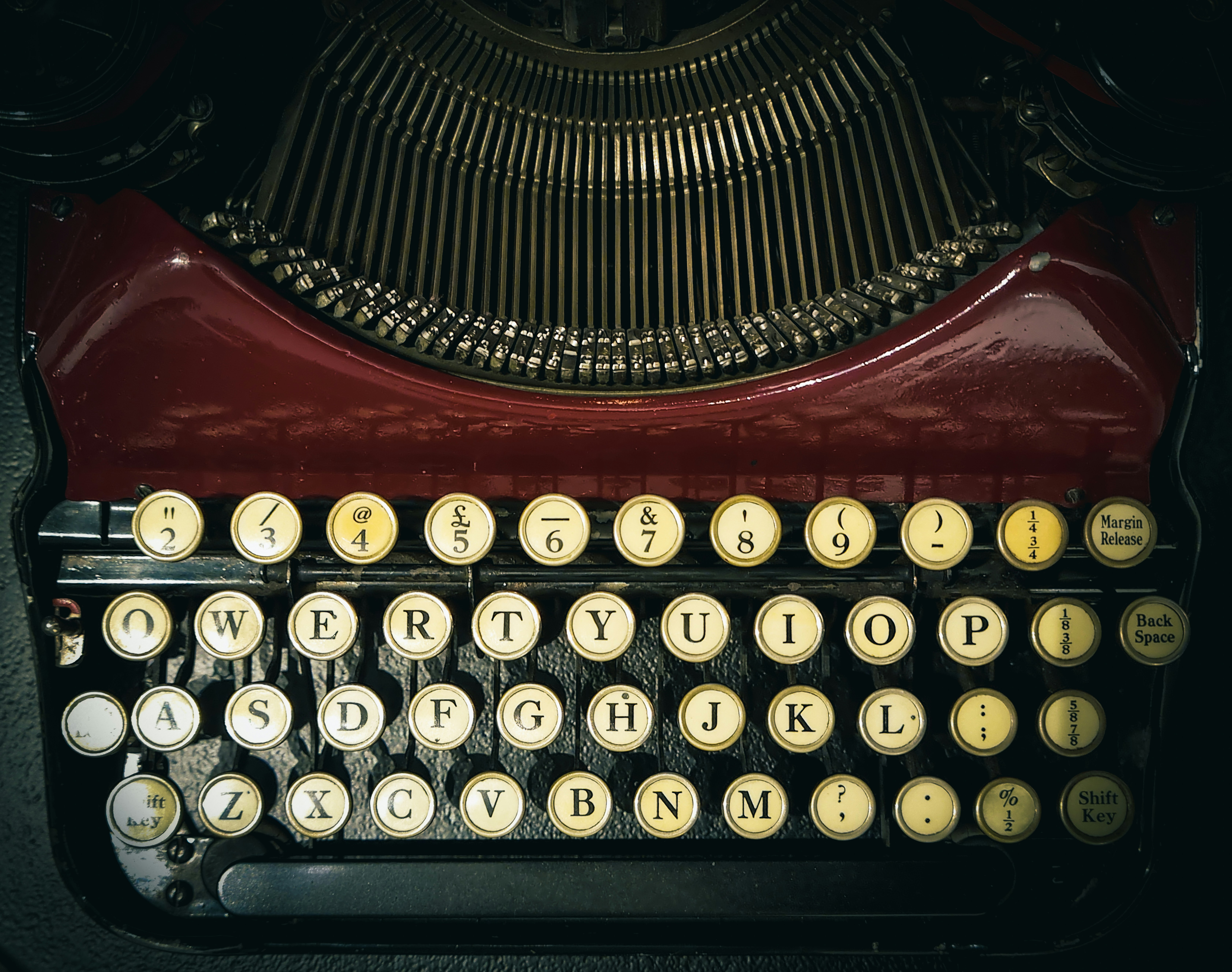
Image: Johnny Briggs
With our thanks to:
Andrew Borneman received his MFA from Vermont College of Fine Arts in 2026 and is a high school English teacher in Baltimore, USA. He has published fiction and creative nonfiction in CRAFT, Corpus Callosum and The Hemlock Journal.
Anish Francis is a writer from Kerala, India, who primarily writes in Malayalam. His debut novel Vishadavalayangal was shortlisted in the DC Books Novel Competition (2018). He has authored multiple novels and short story collections, along with a psychological short story collection available on Amazon Kindle. Some of his notable works include Thakkakedu, Crown Cobra, and Ishan 7B. He also writes short fiction in English and has completed two English novels. Professionally, he works as an assistant engineer with the Kerala State Electricity Board.
Gurleen Minhas is a 20-something-year-old who has a lot of things she loves, such as her friends and flatmates, her tailless deaf cat (@mcnubbycat on Instagram), her grandmother’s chai and chocolate milk. You can often find her cycling down the streets of Tāmaki Makaurau, the only place she has ever called home.
Lauren Middleton is a creative strategist and children's book author from Tāmaki Makaurau. Her debut book Pippa and the Sheep Snatchers was published in 2025 and was in the Whitcoull's Kids top 50 book list that year. She is also the NZSA youth representative as of 2026. When she isn't writing or dancing around the house, you can find her eating her way around Auckland or spending time with friends and family. Her special ability is doing a Gollum voice (from Lord of the Rings).
Instagram: @lauren___middleton
www.batemanbooks.co.nz/product/pippa-and-the-sheep-snatchers
Wandering troubadour Lorraine Caputo is a documentary poet, translator and travel writer. Her works appear internationally in over 500 journals and 24 collections of poetry—including Orinoco Plains (dancing girl press, 2025) and Pastiches—A Peruvian Road Trip (Origami Poems Project, 2026). She also authors travel narratives, articles and guidebooks. She is a Parliamentary Poet Laureate of Canada honouree (2011) and multiple Best of the Net and Pushcart Prize nominee. Caputo has done literary readings from Alaska to the Patagonia. She journeys through Latin America with her faithful knapsack Rocinante, listening to the voices of the pueblos and Earth.
https://latinamericawanderer.wordpress.com
https://bsky.app/profile/lorrainecaputo.bsky.social
Loulou Callister-Baker is a lawyer and writer based in Tāmaki Makaurau, Aotearoa. Her writing can be found on https://linktr.ee/louloucallisterbaker
Max Parkes is a writer from Ōtepoti Dunedin.
Misa Hang is an emerging writer based in Naarm, Australia. Misa's first poem was shortlisted for the Dorothy Porter Award for Emerging Poets. Since then, Misa has been published in the University of Melbourne’s Nature Human Dialogue, the University of Queensland’s Jacaranda Journal and received a Highly Commended for the Theresa Matheson Bequest Award.
Sara Szatmary is a fiction writer from the upper left corner of the United States. Her short stories can be found in Flash Fiction Magazine, The Last Line Journal, 101 Words and her website, Heartfelt Fiction


